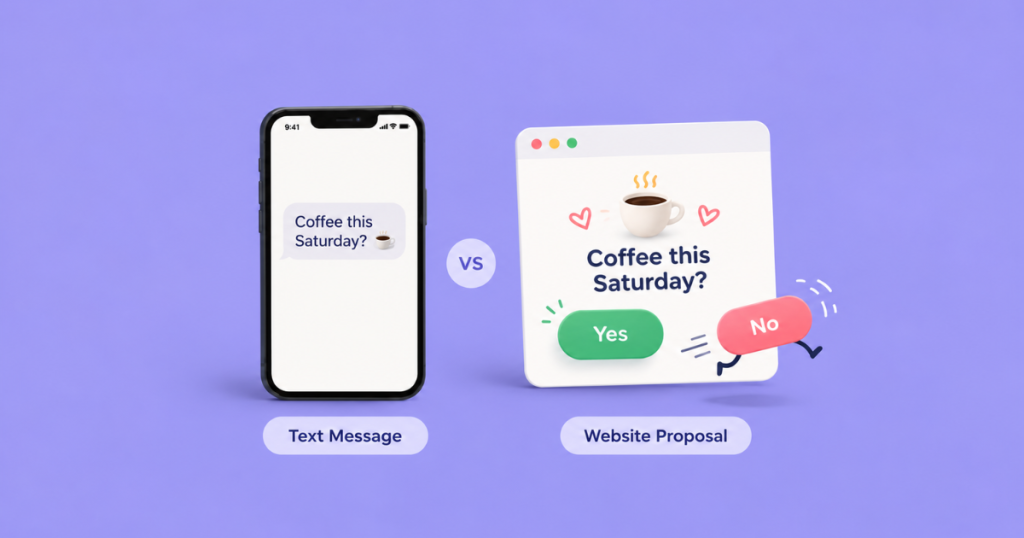
You type, “Want to grab coffee this Saturday?” Then you read it again. Add an emoji. Delete the emoji. Somehow, a simple invitation has become a whole project.
The problem isn’t really the wording. You want the other person to know you’ve put a little thought into asking. A text might do that perfectly. But for a Valentine’s invitation, a promposal or a surprise date, you might want something a little more playful.
That’s where a website proposal comes in: a small online card that turns your question into something the other person can interact with. No elaborate website needed.
So, should you send the message or make the card? It depends less on which looks impressive and more on who you’re asking.
The Classic Text Message: Simple for a Reason
There’s nothing wrong with a straightforward invitation. “Coffee on Saturday? My treat.” is clear, friendly and easy to answer. Sometimes that’s exactly what the moment needs.
A text keeps the conversation in a familiar place. There’s no separate page to open and no playful setup to figure out. When you’re confirming plans or making a casual suggestion, that simplicity is a strength.
What it doesn’t give you is a separate little occasion. Your invitation sits in the same conversation as “On my way” and “Did you see this?” That may be fine. But when the invitation itself is part of the surprise, you might enjoy doing something different.
A thoughtful message doesn’t become less meaningful just because it’s short. The question is whether you want to start a conversation or add a small surprise to it.
What a Website Proposal Actually Looks Like
Here, “website proposal” doesn’t mean a business pitch or a complicated website. Picture a small card with a question, two answer buttons and a personal touch.
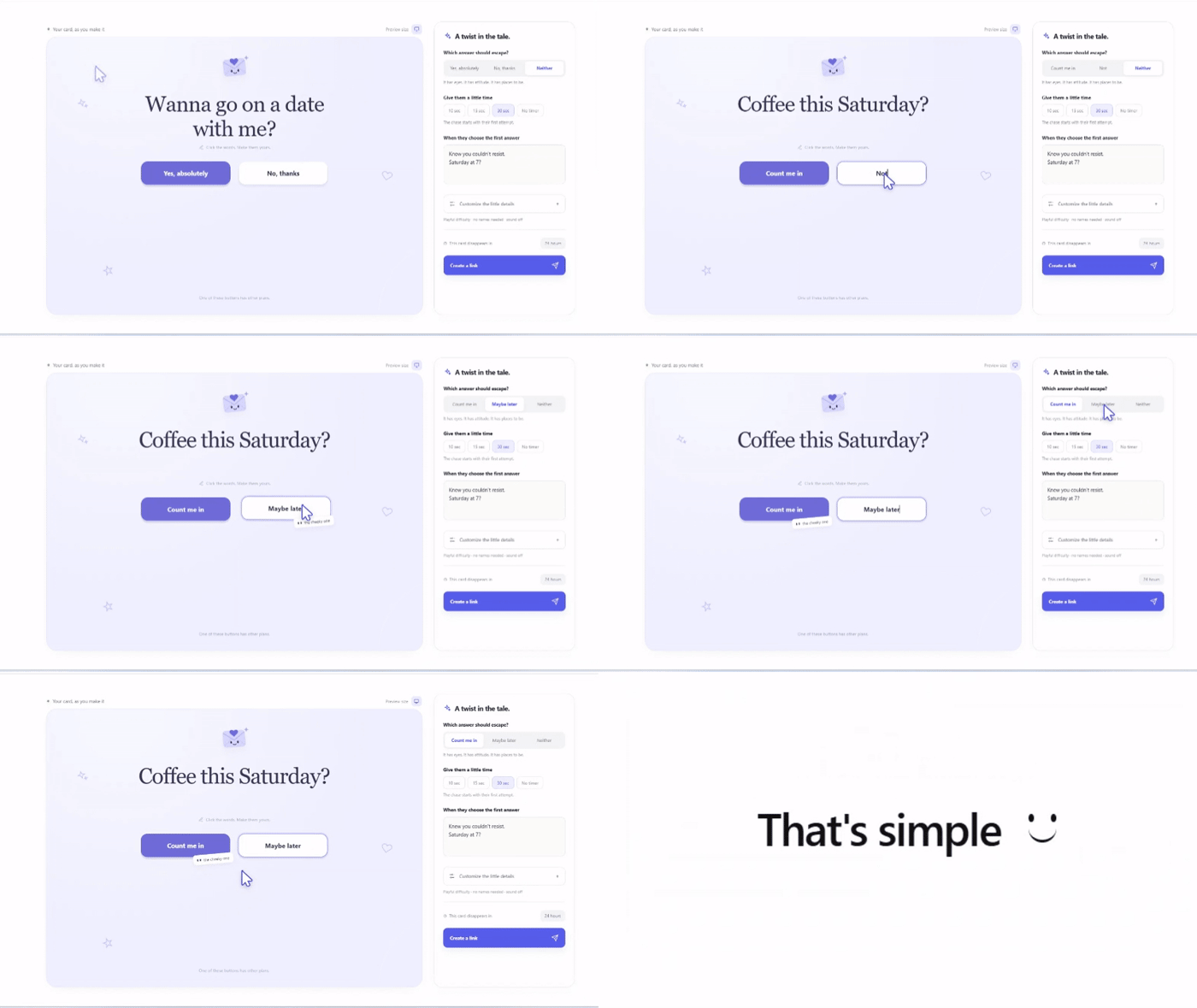
The question might be “Will you be my Valentine?” or “Ready for your birthday surprise?” In the playful version, one button moves away when the recipient tries to click it. That unexpected movement is the joke.
A yes or no card from NavigationHubs lets you build around that idea with your own question, button labels and ending messages. The tool also includes options for a photo, a voice note and the escaping-button behavior.
The personal details are what make the card worth opening. A photo from your last day out together or a reference to an inside joke can do more than a fancy design.
The moving button should stay a joke, though. Leave room for a genuine answer, including a no outside the card. The point is to make someone smile, not make declining uncomfortable.
Website Proposal vs. Text Message at a Glance
| What matters | Text message | Website proposal |
| Setup | Write and send | Choose the details, preview and share |
| Presentation | Part of your existing conversation | A separate card built around the question |
| Playfulness | Comes from your wording | Can include a moving answer button |
| Opening it | Read it in the conversation | Open a link to view the card |
| Best suited to | Quick invitations and confirming plans | Playful invitations and personal surprises |
Neither format guarantees a better answer. A card gives you more room to be creative; a text keeps things simple.
When a Text Message Is the Better Choice
Use a text when the invitation doesn’t need a big introduction. “Still good for seven?” doesn’t need its own landing page.
It’s also a sensible choice when you’re still getting to know someone and are unsure how they would feel about a playful card. A warm, direct invitation leaves less room for the presentation to distract from the question.
The same goes for time-sensitive plans or someone who is cautious about opening links. There’s no need to turn a simple answer into an extra task.
When an Interactive Card Is Worth the Extra Effort
A card makes more sense when the person will enjoy the setup as much as the invitation.
Maybe you and your partner turn everything into an inside joke. Maybe your friend loves a birthday surprise. Or maybe you’re planning a promposal and want something personal without making a public scene.
In those situations, the card gives you somewhere to put the details that make the invitation yours: a familiar photo, a favorite phrase or a silly answer label only the two of you would understand.
You don’t need to use every feature. One good question and one personal detail can be enough.
How to Make a Card That Feels Personal
Start with the actual question. Keep it short and specific. “Coffee at our usual place this Saturday?” gives the recipient more to respond to than a vague “Will you…?” Save extra details for the ending.
Choose a mood that fits. Romantic, funny or simple can all work. Choose what feels natural between you, rather than what looks most elaborate.
Add one detail they will recognize. Use a shared photo, a short voice note or a line from an ongoing joke. The card should sound like you, not like a greeting copied from somewhere else.
Think about both answers. Personalize both endings. A yes might lead to the time and place. The other outcome should still feel kind and comfortable. Keep the runaway-button effect playful rather than frustrating.
Preview it before sharing. Check the wording, buttons and endings, including how the card looks on a phone. Then send the link with a simple introduction: “I made you something. Open it when you have a minute.”
A Few Details Matter More Than the Format
Keep the invitation about the recipient, not about showing off the card. Match the tone to your relationship, and give them space to answer in their own way.
Also, don’t let the presentation hide the practical question. Someone shouldn’t have to work through a long message just to discover that you’re asking them to dinner on Friday.
A little playfulness works best when the invitation underneath it is clear.
The Real Difference Is the Thought Behind It
A text can be thoughtful. An interactive card can be fun. Neither automatically proves that you care more.
For everyday plans, send the message. When the invitation itself could be part of the fun, make the card. You can even use both: a short text to introduce something you made just for them.
And once they say yes, remember to actually pick a coffee shop.